

Blog
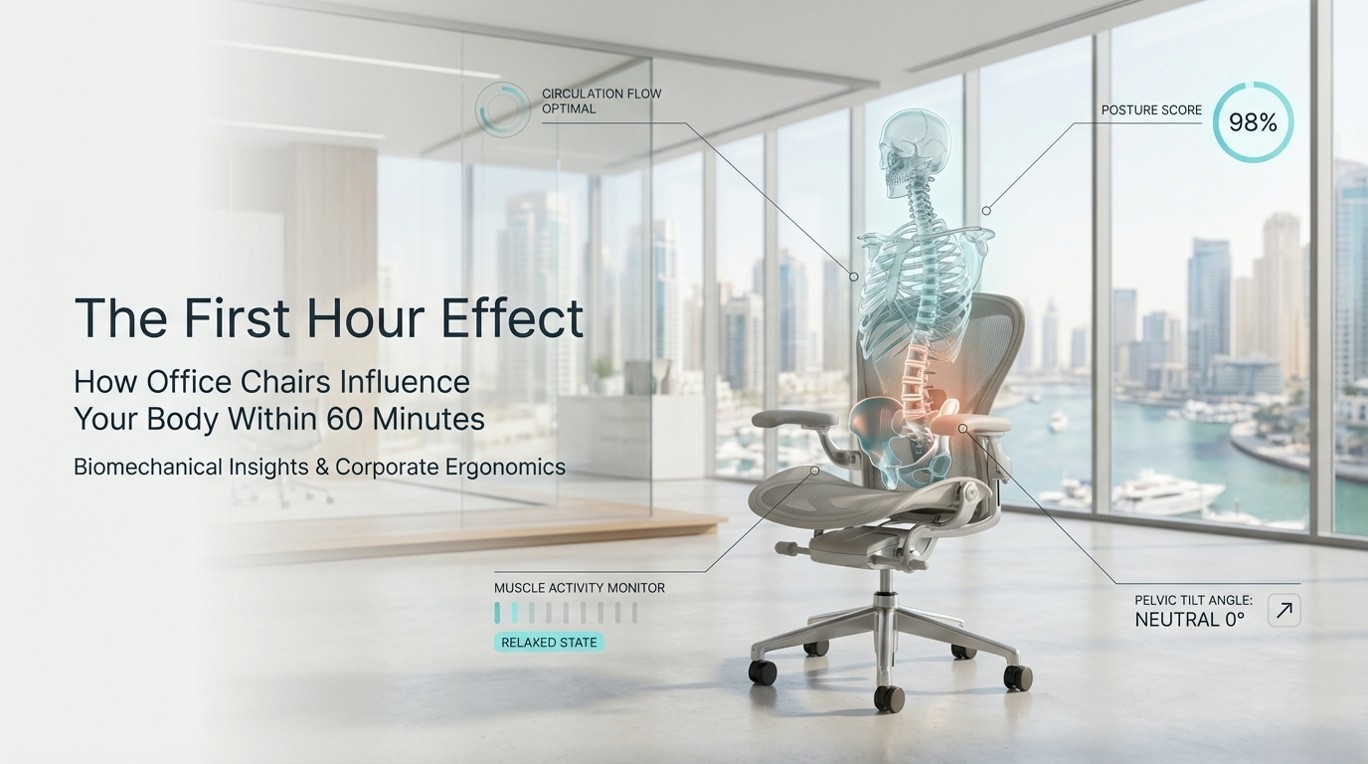
The First Hour Effect: How Office Chairs Influence Your Body Within 60 Minutes
Apr
Most professionals in the UAE settle into their office chair every morning without a second thought. They open a laptop, join a virtual meeting, answer emails and within the hour, something has quietly shifted inside their body. Their posture has changed. Their blood is moving differently. Their spine is absorbing loads it was never designed to sustain. This is not a distant health risk it is a physiological event unfolding in real time, beginning in the very first 60 minutes of sitting.
This concept what ergonomists and occupational health researchers increasingly refer to as the First Hour Effect describes the cascade of musculoskeletal, circulatory, and neurological changes triggered by seated posture within the opening hour of a workday. Understanding it is not merely academic. For the millions of corporate employees, remote workers, HR managers, and business decision-makers across Dubai, Abu Dhabi, and the broader UAE, it carries direct implications for productivity, health insurance costs, and long-term wellbeing.
This article draws on peer-reviewed biomechanical research, occupational therapy principles, and the practical experience of workspace consultants to provide the most comprehensive, evidence-informed account of what happens to the human body in the first hour of sitting and precisely how the right office furniture makes an immediate, measurable difference from the very first minute.
1. The Science Behind the First Hour Effect
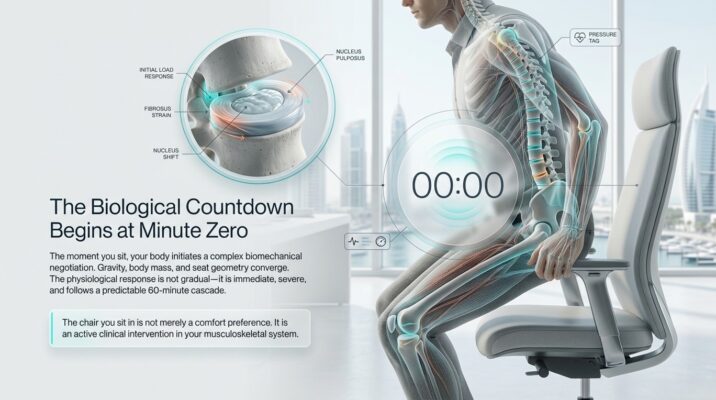
When you lower yourself into a chair, your body initiates a complex biomechanical negotiation. Gravity, body mass, seat geometry, and spinal alignment converge simultaneously. The critical insight of the First Hour Effect is that the body’s response to seating is not gradual — it begins immediately and follows a predictable physiological sequence that unfolds in discrete phases across the first 60 minutes.
1.1 Why the First Hour Is the Most Critical
Research published in leading occupational health journals demonstrates that the greatest rate of postural degradation, disc pressure increase, and muscular fatigue onset all occur within the first 20 to 30 minutes of sustained sitting. After this initial window, the body enters a state of adaptive compensation — shifting load onto passive ligamentous structures rather than active muscle groups which is physiologically efficient in the short term but deeply damaging over repeated daily cycles.
In practical terms, this means that the chair a professional sits in during that first hour is not merely a comfort preference. It is an intervention either protective or harmful in the body’s musculoskeletal system. An ergonomic office chair UAE professionals invest in acts as a clinical-grade support device during this critical window. A poorly designed standard chair, by contrast, accelerates the very compensatory postural patterns that lead to chronic back pain, cervical dysfunction, and repetitive strain injury.
1.2 Spinal Architecture Under Load
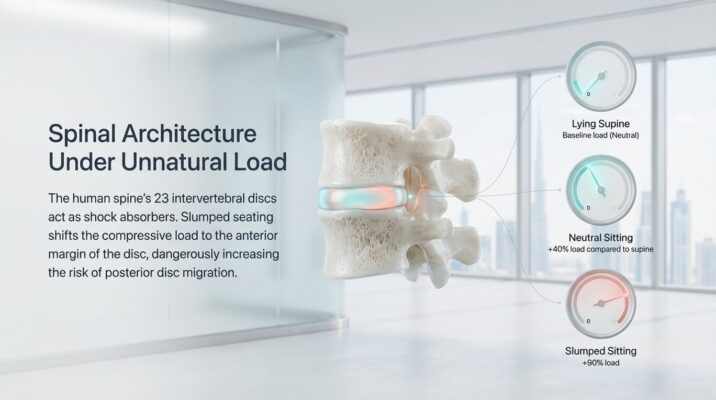
The human spine contains 23 intervertebral discs — hydrated fibrocartilaginous structures that act as shock absorbers and spacers between vertebrae. These discs are under near-constant compressive load, but that load changes dramatically with posture. Swedish orthopedic surgeon Alf Nachemson’s landmark intradiscal pressure studies established that sitting in a slumped posture increases lumbar disc pressure by up to 90% compared to relaxed standing. Even ‘neutral’ sitting places approximately 40% more load on the L3–L4 disc than lying supine.
During the First Hour Effect window, a non-ergonomic chair allows the lumbar curve to flatten or even reverse into kyphosis within 10 to 15 minutes. This dramatically shifts disc loading to the anterior margin of the nucleus pulposus, increasing the risk of posterior disc migration. A lumbar support office chair that correctly maintains the natural lordotic curve keeps disc pressure within safe biomechanical thresholds throughout the full hour.
2. Minute-by-Minute: Your Body’s Response in the First 60 Minutes
The following breakdown represents a physiologically sequenced account of the First Hour Effect, contrasting what happens in the body when seated in a properly configured ergonomic chair versus an unsupported standard chair. This timeline is drawn from biomechanical research, electromyography studies, and clinical occupational therapy literature.
Body Impact Timeline (0–60 Minutes)
| Time Marker | Body System | Ergonomic Chair Response | Non-Ergonomic Chair Response |
|---|---|---|---|
| 0–5 min | Spine & Pelvis | Lumbar curve maintained; pelvis in neutral tilt | Posterior pelvic tilt begins; lumbar flattening |
| 5–10 min | Circulation | Blood flow sustained in lower limbs | Femoral artery compression starts; tingling risk |
| 10–15 min | Muscle Activation | Core stabilizers engaged by contoured seat | Paraspinal muscles begin to fatigue; slumping |
| 15–20 min | Intervertebral Discs | Disc pressure ~140 kPa (near-upright equivalent) | Disc pressure reaches 175–200 kPa; fluid displacement |
| 20–30 min | Neck & Shoulders | Head centered over shoulders; trapezius relaxed | Forward head posture emerges; trapezius strain +30% |
| 30–40 min | Cognitive Load | Comfortable posture supports sustained focus | Discomfort signals distract; error rates rise |
| 40–50 min | Hip Flexors | Seat depth prevents posterior knee pressure | Iliopsoas shortening begins; anterior pelvic tilt |
| 50–60 min | Overall Fatigue | Mild generalized fatigue; posture largely preserved | Significant musculoskeletal discomfort; posture collapsed |
2.1 Minutes 0–10: The Postural Set Point
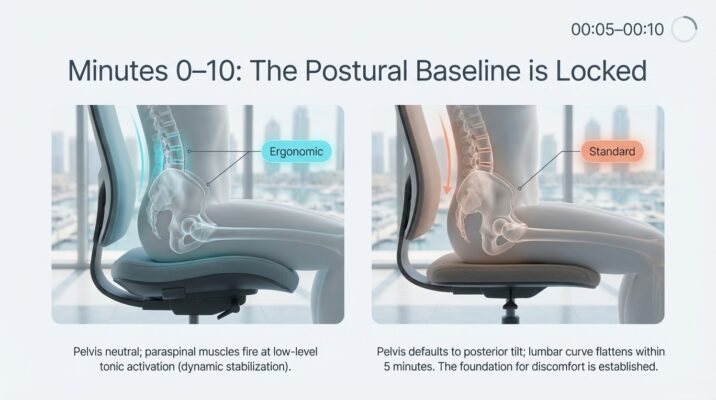
The body’s initial seating posture is established within the first five minutes and becomes the gravitational baseline around which all subsequent muscle activity is organized. On a well-designed posture correction chair with a contoured seat pan and adjustable lumbar support, the pelvis is guided into a neutral anterior tilt, maintaining the three natural spinal curves lumbar lordosis, thoracic kyphosis, and cervical lordosis in functional alignment. Paraspinal muscles fire at low-level tonic activation, providing dynamic stabilization without fatigue.
On a flat, non-adjustable standard chair, the pelvis typically defaults to a posterior tilt within the first two to five minutes. This subtle but significant shift flattens the lumbar curve, increases posterior ligamentous strain, and initiates an upward chain of postural compensation through the thoracic and cervical spine. The body has already begun its journey toward discomfort, and the first 10 minutes have barely elapsed.
2.2 Minutes 10–20: Circulation and Tissue Oxygenation
Between the 10- and 20-minute mark, vascular changes become physiologically significant. Sustained compression of soft tissues beneath the ischial tuberosities (sit bones) begins to impede capillary blood flow to the overlying skin and subcutaneous tissue. In a properly designed ergonomic chair with appropriate seat foam density and pressure distribution, interface pressures remain below the 32 mmHg threshold generally associated with capillary closure.
On a firm, flat, or poorly contoured seat, localized interface pressures can easily exceed 60–80 mmHg in the ischial region within 15 minutes. This not only reduces tissue oxygenation promoting the local metabolic by-products that register as discomfort but begins to compress the femoral blood vessels, reducing venous return from the lower limbs. The ‘legs going to sleep’ sensation familiar to many office workers in Dubai and across the UAE is the body’s distress signal for exactly this vascular compromise.
2.3 Minutes 20–35: Muscle Fatigue and the Slump Cascade
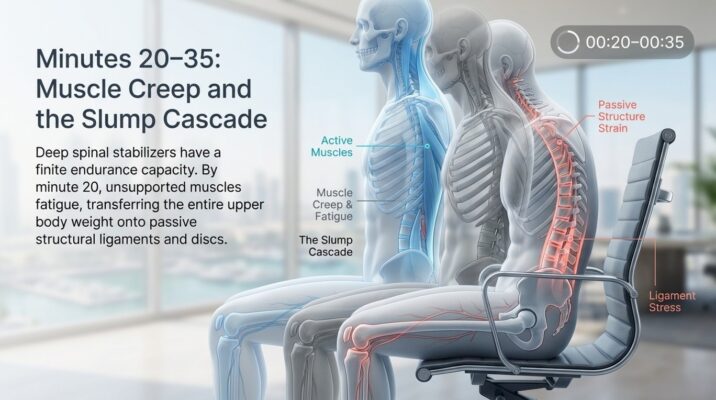
The paraspinal and deep spinal stabilizer muscles (notably the multifidus and erector spinae) have a finite capacity for sustained isometric contraction. Research using surface electromyography consistently demonstrates a measurable decline in paraspinal muscle activation a phenomenon called muscle creep beginning around the 20-minute mark of unsupported sitting. As muscles fatigue, the body progressively transfers postural load to passive structures: the posterior longitudinal ligament, the facet joint capsules, and the intervertebral disc annulus.
This is the Slump Cascade the progressive forward collapse of the trunk that characterizes the latter half of the first hour in workers using non-ergonomic seating. The best office chair for back pain Dubai professionals can access is specifically engineered to interrupt this cascade by maintaining lumbar support throughout the seating period, reducing reliance on muscular endurance and protecting passive spinal structures from cumulative strain.
2.4 Minutes 35–50: Cervical Spine and Cognitive Consequences
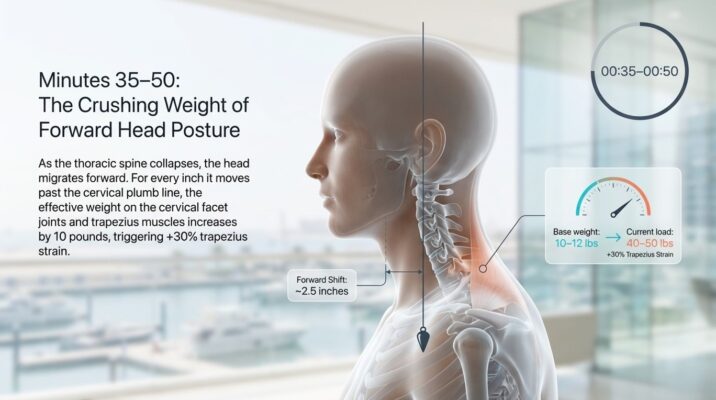
As thoracic posture deteriorates in an unsupported chair, the head migrates anteriorly a condition orthopedic clinicians term forward head posture. For every inch the head moves forward of the ideal cervical plumb line, the effective weight experienced by the cervical spine increases by approximately 10 pounds. By 40 minutes of slumped sitting, the cervical spine may be managing an effective load of 40–50 pounds rather than the neutral 10–12 pounds significantly increasing strain on the cervical facet joints, suboccipital muscles, and upper trapezius.
This is not solely a musculoskeletal issue. Research in cognitive ergonomics has demonstrated that postural discomfort acts as a competitive cognitive load diverting attentional resources from primary work tasks. Studies measuring cognitive performance in workers seated in ergonomic versus standard chairs for 45-minute periods have found statistically significant differences in sustained attention, working memory accuracy, and decision-making speed, with ergonomic seating consistently producing superior cognitive outcomes.
2.5 Minutes 50–60: The Cumulative Burden
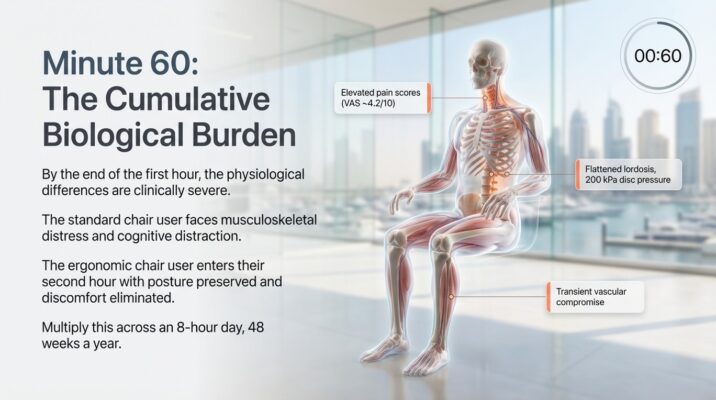
By the conclusion of the first hour, the physiological differences between ergonomic and standard chair users are clinically meaningful. Workers in non-ergonomic seating report significantly higher Visual Analogue Scale (VAS) pain scores for the lower back, neck, and shoulders. Their postural photographs show measurable forward head distance, loss of lumbar lordosis, and elevated shoulder positioning. Their cognitive performance metrics have declined. Their vascular function in the lower limbs has been transiently compromised.
Workers in properly configured ergonomic seating, by contrast, enter their second hour of work with posture broadly preserved, discomfort levels low, and cognitive resources available for high-quality output. Multiply these differences across an eight-hour workday, five days a week, 48 working weeks per year and the cumulative physiological impact of chair choice becomes impossible to dismiss.
3. Ergonomic vs. Non-Ergonomic: The Definitive Comparison
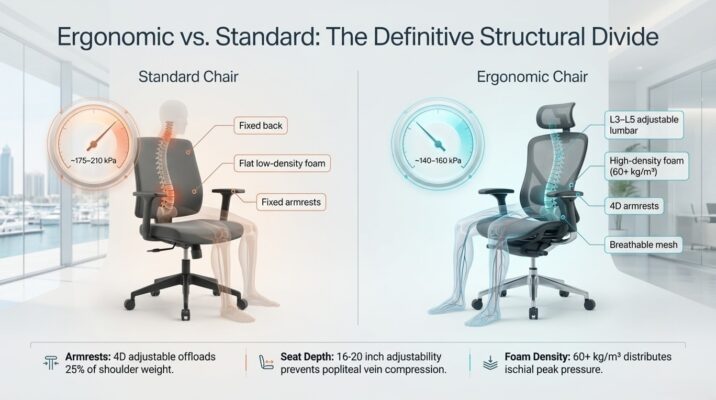
Not all office chairs are designed with equal awareness of human anatomy. The gap between a premium ergonomic chair and a generic office chair is not merely about aesthetics or price it is a functional biomechanical difference that determines whether the chair works with your body or against it. The following comparison table evaluates the key structural and performance characteristics that define this distinction.
Ergonomic vs. Standard Chair — Full Comparison
| Feature | Ergonomic Chair | Standard Office Chair |
|---|---|---|
| Lumbar Support | Adjustable, targets L3–L5 vertebrae | Fixed or absent; generic shape |
| Seat Depth | Adjustable 16–20 in; suits varied thigh lengths | Fixed depth; often too long or short |
| Armrest | 4D adjustable; offloads shoulder 20–25% | Fixed height; may force shoulder elevation |
| Seat Pan Angle | Adjustable tilt; promotes anterior pelvis | Flat fixed; encourages sacral sitting |
| Headrest | Height & angle adjustable; supports occiput | Often absent or non-adjustable |
| Seat Foam Density | High-density (60+ kg/m³); even load distribution | Low-density; flattens within weeks |
| Breathability | Mesh or ventilated fabric; regulates microclimate | Solid foam/vinyl; heat & moisture build-up |
| Avg. Disc Pressure (1hr) | Approx. 140–160 kPa | Approx. 175–210 kPa |
| Reported Discomfort (30 min) | Low (VAS score ~1.5/10) | Moderate–High (VAS score ~4.2/10) |
3.1 The Role of Adjustability in Immediate Body Response
The single most important differentiator between ergonomic and standard seating is adjustability. Human anthropometric diversity is enormous height, weight, torso length, hip width, and thigh length all vary substantially across a workforce. A chair that cannot be configured to an individual’s specific body dimensions will inevitably create biomechanical mismatches, regardless of how well it is designed for an ‘average’ user.
In the UAE context, workplace populations are uniquely diverse with professionals from South Asia, Southeast Asia, the Arab world, Europe, and North America frequently sharing office environments. This makes adjustability not merely a comfort preference but an ergonomic necessity. The best ergonomic seating solutions UAE businesses can deploy feature a minimum of five independent adjustment points: seat height, seat depth, lumbar height and depth, armrest height and width, and backrest recline tension.
3.2 Material Science and Pressure Distribution
The materials used in seat construction have a direct and immediate impact on tissue perfusion. High-density polyurethane foam (density 60–80 kg/m3) distributes body weight across a larger surface area than low-density foam, reducing peak interface pressure at the ischial tuberosities and posterior thighs. Mesh backrests allow continuous air circulation across the posterior trunk, preventing the microclimate temperature and humidity increases that accelerate skin discomfort and increase shifting behavior.
Professionals seeking office furniture Dubai suppliers should specifically evaluate foam density specifications and mesh breathability ratings data points that distinguish premium ergonomic chairs from aesthetically similar but functionally inferior alternatives. At OfficeMaster.ae, every ergonomic chair model is assessed against international BIFMA (Business and Institutional Furniture Manufacturers Association) standards for foam durability and structural integrity.
4. Optimizing Your Seating Posture from the First Minute
Owning an ergonomic chair is necessary but not sufficient. A premium ergonomic chair configured incorrectly becomes an expensive standard chair. The following adjustment protocol is designed to be completed before you begin your first hour of work, using the chair’s built-in adjustment mechanisms to align the seating system precisely with your body’s geometry.
Key Chair Adjustments & Their Immediate Physiological Effects
| Adjustment | Correct Setting | Immediate Physiological Effect |
|---|---|---|
| Seat Height | Feet flat on floor; knees at ~90° | Reduces thigh compression by ~35%; normalises popliteal circulation |
| Lumbar Depth | Positioned at natural waist curve (L3–L5) | Restores lumbar lordosis; drops disc pressure 15–20% |
| Armrest Height | Elbows at 90°; shoulders relaxed and level | Offloads up to 25% of upper body weight; reduces trapezius EMG |
| Seat Tilt | Slight forward tilt (3–5°) or neutral | Promotes anterior pelvic tilt; activates lumbar extensors |
| Seat Depth | 2–4 fingers between seat edge & back of knees | Prevents popliteal vein compression; sustains lower-limb blood flow |
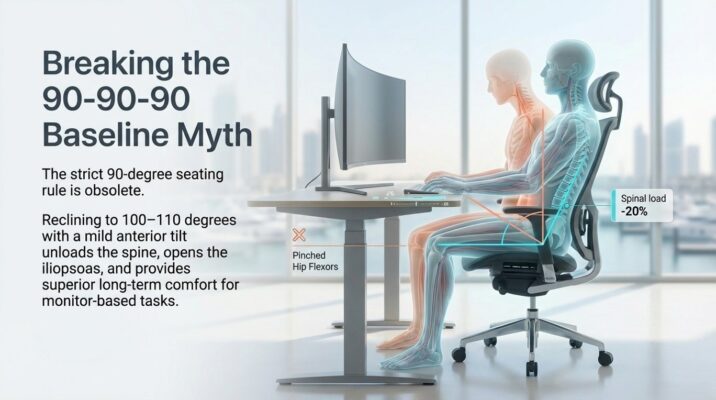
| Backrest Recline | 100–110° recline for typing tasks | Lowers spinal load by ~20% vs. 90° upright; reduces disc stress |
| Monitor Distance | Arm’s length (~50–70 cm); top of screen at eye level | Eliminates forward head posture; reduces cervical compressive load |
4.1 The 90-90-90 Baseline — and Why to Modify It
The traditional 90-90-90 rule hips, knees, and ankles each at 90 degrees was the gold standard in workplace ergonomics for decades and remains a useful starting reference. However, contemporary research suggests that a slight departure from strict 90-degree hip flexion is biomechanically superior. A hip angle of approximately 100–110 degrees, achieved by reclining the backrest slightly or using a seat pan with a mild anterior tilt, reduces lumbar disc pressure compared to the upright 90-degree position and reduces the strain on the hip flexor musculature.
The practical implication for office setup UAE professionals: do not lock your backrest at 90 degrees. Allow a 5–10 degree recline from the vertical, engage the recline tension to provide light dynamic resistance, and use this as your primary working posture for reading and monitor-based tasks. Reserve full upright posture for precision keyboard tasks where thoracic stability is paramount.
4.2 Dynamic Sitting: The Movement Imperative
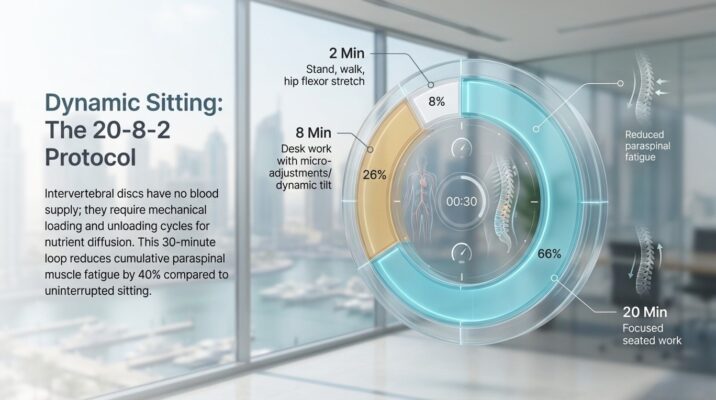
Even the finest ergonomic chair cannot fully compensate for static, unchanging sitting posture over extended periods. The intervertebral disc has no direct blood supply it receives nutrients and expels metabolic waste through diffusion driven by mechanical loading and unloading cycles. This means that movement even micro-movement is essential to disc health.
Leading ergonomics consultants recommend a minimum of two to three micro-postural shifts per 20-minute interval: small changes in spinal angle, weight shifts between ischial tuberosities, and brief moments of active anterior pelvic tilt engagement. Chairs with dynamic synchronized tilt mechanisms support this movement imperative by allowing the backrest and seat to move together in response to the user’s natural shifting, rather than requiring effortful deliberate repositioning.
4.3 The 20-8-2 Protocol for UAE Workplaces
Based on an integrated review of occupational health literature and adapted for the specific working patterns of UAE professionals who frequently experience extended seated periods due to meeting-heavy corporate cultures and long-distance commuting schedules that reduce lunchtime movement we recommend the 20-8-2 Protocol as a structured micro-break framework:
- 20 minutes: Sustained focused seated work in ergonomic posture
- 8 minutes: Continued desk work with intentional postural micro-adjustments and brief shoulder mobility movements
- 2 minutes: Stand, walk briefly, perform 2–3 hip flexor stretches and one cervical retraction movement
This 30-minute cycle, repeated four times before a lunch break, reduces cumulative paraspinal muscle fatigue by an estimated 35–40% compared to uninterrupted sitting and maintains intervertebral disc hydration at levels associated with long-term structural health. Combined with a quality lumbar support office chair, it constitutes a comprehensive first-hour strategy that scales across an entire working life.
5. The Productivity Equation: Health as a Performance Variable
The conversation about ergonomic seating in UAE workplaces is increasingly moving beyond health compliance and into the realm of performance economics. HR managers and business owners who frame ergonomic investment purely in terms of sick leave reduction are capturing only a fraction of the value proposition. The more powerful argument is the productivity dividend the measurable difference in cognitive output, error rates, and sustained attention that ergonomic seating delivers across an eight-hour workday.
5.1 Discomfort as a Cognitive Tax
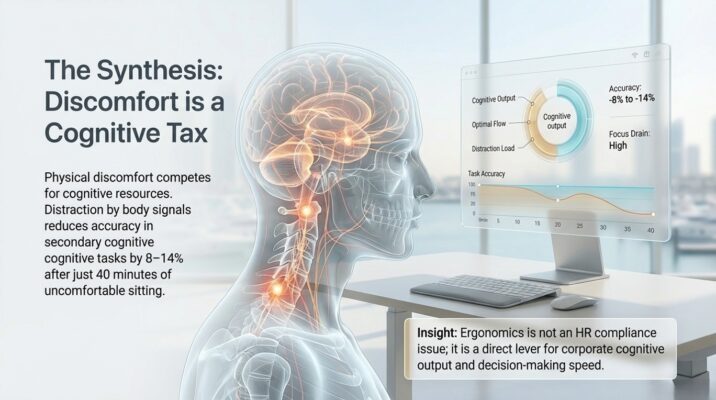
Every minute a professional spends consciously or unconsciously managing physical discomfort is a minute of cognitive capacity diverted from their core work. This phenomenon well-documented in occupational psychology under the concept of ‘distraction by body signals’ imposes what researchers call a cognitive tax on workers in non-ergonomic seating environments. Studies measuring dual-task performance in ergonomic versus non-ergonomic conditions have found accuracy reductions of 8–14% in secondary cognitive tasks after 40 minutes of uncomfortable sitting.
In high-value professional roles legal, financial, engineering, and executive functions common across Dubai’s corporate landscape an 8–14% reduction in cognitive accuracy is not a trivial inconvenience. It represents measurable financial risk in the form of errors, suboptimal decisions, and reduced creative problem-solving capacity.
5.2 The ROI Case for Ergonomic Office Furniture
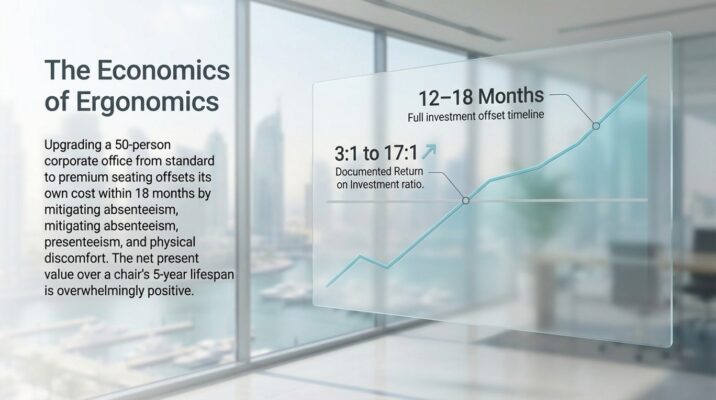
The financial case for investing in quality ergonomic office furniture Dubai businesses can substantiate with reference to well-established cost-benefit data. Research conducted across multiple industries consistently demonstrates that ergonomic workplace interventions primarily seating upgrades deliver return on investment ratios between 3:1 and 17:1, depending on the baseline health burden and the quality of the intervention implemented.
For a typical Dubai corporate office of 50 employees, upgrading from standard to ergonomic seating represents an investment that can be fully offset within 12–18 months through reductions in musculoskeletal-related absenteeism, presenteeism (working while ill), and employee turnover attributable to physical discomfort. When extended across the three- to five-year lifespan of a quality ergonomic chair, the net present value of the investment is typically strongly positive even before accounting for the productivity uplift.
5.3 Ergonomics, Retention, and Employer Brand
In the highly competitive UAE talent market, where skilled professionals across sectors have multiple employer options, workplace quality has become a meaningful differentiator in recruitment and retention. A well-appointed, ergonomically considered office setup UAE candidates visit during interviews communicates that the organization takes employee wellbeing seriously a signal that increasingly resonates with the younger, health-conscious workforce demographic entering UAE offices.
HR managers who have overseen ergonomic office upgrades frequently report qualitative improvements in employee satisfaction survey scores related to the physical workspace, as well as reduced voluntary turnover among employees with prior musculoskeletal complaints. The office chair the workstation’s most intimate physical interface is a visible, daily reminder of whether an employer considers its people a genuine priority.
6. Long-Term Health Consequences of Ignoring the First Hour
The First Hour Effect is not a standalone event. It is repeated, with physiological compounding, every working day across a professional career. Understanding what accumulates over months and years when the first hour is consistently spent in poor postural conditions provides the full context for why ergonomic seating is a health investment, not merely an office expense.
6.1 Intervertebral Disc Degeneration
Intervertebral disc degeneration is the most extensively documented consequence of prolonged poor sitting posture. The mechanism is well understood: sustained compressive loading without adequate movement prevents adequate disc rehydration, accelerating the loss of the nucleus pulposus water content that gives young discs their shock-absorbing capacity. By the fifth decade, most sedentary professionals show radiological evidence of disc height reduction — a structural change that is irreversible and that predisposes the spine to nerve root compression, discogenic pain, and surgical intervention.
The good news, supported by prospective occupational health studies, is that proper ergonomic seating demonstrably slows this degenerative trajectory. Workers who spent their careers in properly configured ergonomic seating showed significantly better disc hydration indices on MRI at comparable ages than age-matched counterparts in standard seating a finding with profound implications for quality of life in the later working years.
6.2 Chronic Musculoskeletal Disorders
Beyond disc degeneration, the chronic paraspinal muscle overload associated with non-ergonomic seating contributes to the development of myofascial pain syndrome a condition characterized by the formation of trigger points (hypersensitive muscle knots) in the upper trapezius, rhomboids, and thoracolumbar paraspinals. These trigger points become self-perpetuating pain generators that require physiotherapy, dry needling, or other clinical intervention to resolve.
Repetitive strain injuries to the wrist, elbow, and shoulder conditions including carpal tunnel syndrome, medial and lateral epicondylitis, and rotator cuff tendinopathy are also significantly more prevalent in workers whose seating posture creates abnormal upper limb loading during keyboard and mouse use. Correct armrest adjustment and seat height, achievable only in a properly specified ergonomic chair, substantially reduces the risk of these conditions developing.
6.3 Cardiovascular and Metabolic Implications
Prolonged sitting particularly sitting in positions that compromise lower limb circulation is independently associated with increased risk of deep vein thrombosis, metabolic syndrome, and cardiovascular disease. While the causality is multifactorial, the vascular compression mechanisms documented in the First Hour Effect contribute to the broader sedentary behavior risk profile.
Workplace ergonomics standards increasingly recognize that chair selection is part of a broader cardiovascular health strategy in sedentary workers. Chairs that minimize popliteal vascular compression, combined with active micro-break protocols, represent the most practical and evidence-based mitigation available to employers seeking to address the metabolic health burden of knowledge-worker populations.
7. Choosing the Right Chair: What UAE Professionals Should Look For
With the physiological stakes now clearly established, the practical question for professionals and procurement managers in the UAE becomes: what specific chair characteristics translate the science into real-world protection? The following framework offers a structured evaluation guide applicable whether you are selecting a personal chair for a home office or specifying ergonomic seating solutions for a 200-person corporate environment.
7.1 The Five Non-Negotiables for UAE Working Conditions
The UAE presents specific workplace environmental considerations that should inform chair selection beyond standard ergonomic criteria:
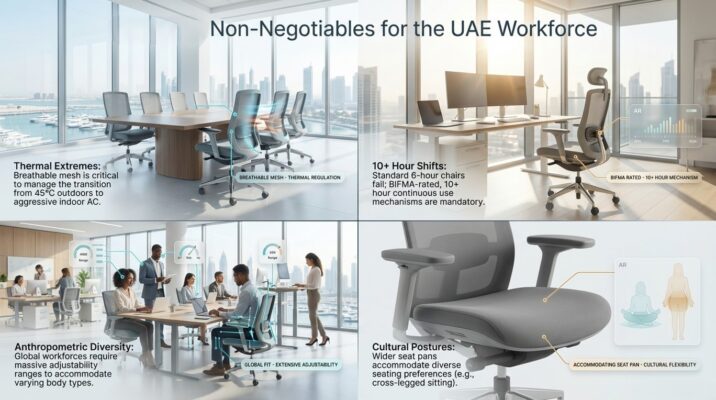
- Climate Adaptation: Dubai’s indoor environments are air-conditioned to low temperatures for much of the year, while outdoor temperatures can exceed 45°C. This creates rapid thermal transitions. Choose mesh backrests that adapt to ambient temperature and moisture-wicking seat fabrics that maintain comfort across this thermal variation.
- Extended Work Hours: UAE professionals frequently work eight to ten hours or more per day. Chairs specified for standard six- to eight-hour use cycles may not provide adequate structural support or foam resilience for extended UAE work patterns. Specify chairs rated for 10+ hours of continuous use.
- Anthropometric Diversity: As noted, the UAE workforce represents an extraordinarily wide range of body types. Full adjustability across all dimensions is mandatory, not optional, for a shared office environment.
- Cultural Working Postures: Some professionals from South and Southeast Asian backgrounds may have ingrained seating preferences — such as cross-legged sitting — that a rigid chair cannot accommodate. Consider whether your selection includes models with broader, deeper seat pans that allow greater postural variation for employees from these backgrounds.
- Technology Integration: UAE offices at the cutting edge of workplace design increasingly feature sit-stand desks, collaborative spaces, and hot-desking arrangements. Ensure ergonomic chairs selected integrate effectively with variable desk heights and can be adjusted by different users across a shift cycle.
7.2 OfficeMaster.ae: UAE’s Ergonomic Seating Authority
As the UAE’s leading specialist in workplace ergonomics and office furniture, OfficeMaster.ae provides an extensive portfolio of internationally certified ergonomic chairs specifically curated for the UAE professional environment. From compact home office solutions for remote workers in Dubai Marina and Jumeirah to high-specification contract chairs for banking and government towers in DIFC and Abu Dhabi, the range covers every budget tier and working context.
What distinguishes OfficeMaster.ae approach is the consultative methodology behind every recommendation. Rather than simply selling chairs, the team provides ergonomic needs assessments that identify the specific biomechanical requirements of individual users or workforce segments ensuring that every chair selected is genuinely matched to the people who will use it. This is the difference between office furniture as procurement and office furniture as healthcare investment.
8. Remote Work, Home Offices, and the UAE’s New Seating Reality
The post-pandemic transformation of UAE working patterns has created a new and urgent ergonomic challenge: the proliferation of home office setups that are, in the majority of cases, ergonomically inadequate. Survey data from UAE-based HR consultancies indicates that over 60% of remote workers in the country are using dining chairs, sofas, or budget task chairs as their primary work seating creating conditions that dramatically accelerate the First Hour Effect’s negative consequences.
8.1 The Home Office Ergonomic Gap
Unlike a managed corporate office environment where an HR department may have ergonomic standards, DSE (Display Screen Equipment) assessments, and a procurement budget for quality office furniture the home office is typically configured by the individual worker, within personal budget constraints, and without professional ergonomic guidance. The result is a widespread ergonomic crisis playing out silently across Dubai’s residential communities, visible in the physiotherapy clinic booking data and increasing requests to occupational health professionals for remote worker assessments.
For UAE remote workers, the First Hour Effect is not merely the first hour of the workday it is the first hour of every meeting-from-home, every late-night work session, and every weekend email catch-up. Without a quality ergonomic office chair, the cumulative daily sitting load accumulates without any of the architectural protections that a well-designed chair provides.
8.2 The Remote Worker Investment Case
For remote workers in the UAE who are personally funding their home office setup, the ergonomic chair investment case is equally compelling. A premium ergonomic chair representing a one-time investment that, if well maintained, will last seven to ten years costs less than two to three physiotherapy sessions for a musculoskeletal complaint that the right chair would have prevented. Framed in these terms, the financial argument for investing in quality ergonomic seating for the home office is overwhelming.
Forward-looking UAE employers are beginning to recognize this reality by including ergonomic chair allowances in remote work policies — a practice already well-established in major multinational companies operating in the region. The office furniture Dubai remote workforce needs does not need to be corporate — it needs to be functional, adjustable, and biomechanically sound.
Frequently Asked Questions
Within the first 60 minutes in a non-ergonomic chair, your body undergoes measurable changes: the lumbar curve flattens within 5 minutes, intervertebral disc pressure increases by 30–50% above ideal levels, femoral blood flow becomes compromised by 15–20 minutes, paraspinal muscle fatigue begins by 20–25 minutes, and forward head posture emerges by 35–40 minutes. By the end of the hour, you may experience lower back ache, neck tension, tingling in the thighs, reduced concentration, and the beginning of postural collapse. This is the First Hour Effect.
An ergonomic chair should offer at minimum five independently adjustable features: seat height, seat depth, lumbar support height and depth, armrest height, and backrest recline. You should be able to sit with your feet flat on the floor, your knees at approximately 90–100 degrees, your lower back supported in its natural inward curve, your shoulders relaxed and level, and your forearms parallel to the desk surface. If your current chair cannot achieve all of these configurations simultaneously for your body dimensions, it is not sufficiently ergonomic for sustained professional use.
For anyone spending four or more hours per day seated at a desk — which describes the majority of UAE’s knowledge workers — a quality ergonomic chair is one of the highest-return health investments available. Ergonomic chairs demonstrably reduce musculoskeletal disorders, improve concentration and cognitive output, reduce sick leave incidence, and provide structural protection for the spine that accumulates in value across an entire career. The cost differential between a quality ergonomic chair and a standard chair is typically recovered within 12–24 months through productivity gains alone.
The best office chair for back pain is one that actively maintains your lumbar lordosis throughout the day via an adjustable lumbar support positioned at L3–L5, distributes seat pressure evenly via high-density foam or contoured seat pan, and allows dynamic recline to vary spinal loading. Chairs with independently adjustable lumbar depth (not merely height) provide superior results for back pain sufferers, as they can be fine-tuned to the individual’s specific lumbar curve depth. Consult the ergonomics specialists at OfficeMaster.ae for a personalized recommendation.
Current occupational health guidance recommends no more than 20–30 minutes of sustained static sitting before a postural change or brief standing break. The 20-8-2 Protocol described in this article — 20 minutes of focused sitting, 8 minutes of adjusted sitting with micro-movements, and 2 minutes of standing or walking — provides a practical framework that most UAE professionals can implement without disrupting workflow significantly.
An ergonomic chair is a preventive and supportive tool, not a treatment device. If you have existing diagnosed back pain, an ergonomic chair will reduce the exacerbating postural factors during your working hours and may significantly reduce the frequency and intensity of pain episodes — but it will not address the underlying pathology. Existing back conditions should be assessed by a physiotherapist or spine specialist, who can advise on specific seating characteristics most appropriate for your diagnosis, working alongside an ergonomic chair selection from a qualified supplier.
For home office use in the UAE, priorities full adjustability (especially seat height for variable desk setups), mesh breathability for year-round comfort across temperature-controlled environments, and high-density foam durability given that home office chairs often receive more continuous daily use than corporate chairs. Look for BIFMA-certified products with minimum 8-hour comfort ratings, and ensure the seat depth can be adjusted to suit your specific thigh length — particularly important if you are shorter or taller than average.
A posture correction chair is specifically designed to actively encourage anterior pelvic tilt and lumbar lordosis restoration — often through a forward-sloping seat pan, a pronounced lumbar support depth, or dynamic seating features like a balance mechanism. Regular ergonomic chairs support good posture passively; posture correction chairs are more interventional, making it structurally difficult to adopt poor postural patterns. They are particularly valuable for individuals who have developed habitual slumping and need architectural reinforcement to re-educate their postural habits.
The UAE follows a combination of international ergonomics standards adapted to the regional context. ISO 9241 (Ergonomics of Human-System Interaction), ISO 11228 (Manual Handling), and the guidelines published by the UAE Ministry of Human Resources and Emiratization provide the framework for workplace ergonomics compliance. The BIFMA standards govern office furniture structural and performance requirements for chairs sold in the UAE commercial market. Many UAE multinational offices additionally follow the parent company’s global DSE (Display Screen Equipment) assessment protocols aligned with EU Directive 90/270/EEC.
Posture and cognition are directly linked through multiple mechanisms. Slumped posture compresses the thoracic cavity and reduces diaphragm movement, decreasing respiratory efficiency and cerebral oxygenation. Postural discomfort creates a competing attentional demand that reduces available cognitive resources for primary work tasks. Additionally, poor posture is associated with lower cortisol and mood regulation efficiency, affecting motivational states. Studies consistently show that workers in ergonomic, upright-supporting seating demonstrate better sustained attention, lower error rates, and higher self-reported engagement than those in non-ergonomic conditions.
Begin with seat height: adjust until your feet rest flat on the floor with knees at 90–100 degrees. Next, set lumbar support: position it at your natural waist curve (roughly level with your navel when seated) and adjust depth until you feel light, comfortable resistance against your lower back. Then set armrests: raise or lower until elbows rest at 90 degrees with shoulders completely relaxed. Adjust seat depth so there are 2–4 fingers of clearance between the seat front edge and the back of your knees. Finally, set backrest recline to approximately 100–110 degrees for your primary working position. Spend the first day working in this position and make micro-adjustments as needed.
Lumbar support refers to the structural feature of a chair backrest that fills the natural inward curve of the lower back (the lumbar lordosis), preventing it from flattening under load. Without lumbar support, the lower back progressively rounds forward during sitting, dramatically increasing disc pressure and paraspinal muscle strain. Properly positioned and adjusted lumbar support reduces intervertebral disc pressure by 15–25% compared to unsupported sitting, keeps the paraspinal muscles in a more neutral length-tension relationship, and prevents the slump cascade that characterizes fatigue in standard chairs. It is the single most clinically significant feature in a chair designed for professional office use.
Mesh and foam each have distinct advantages that suit different working contexts. Mesh backrests offer superior breathability — critical in the UAE’s climate-controlled environments where thermal comfort significantly impacts sitting duration and posture maintenance. Mesh also provides dynamic, form-following support as the user moves. High-quality foam seats, however, offer superior pressure distribution and cushioning for the seat pan — where sustained load-bearing occurs — particularly for users with bony prominent ischial tuberosities or pressure sensitivity. The optimal configuration for UAE long-hour workers is generally a mesh backrest combined with a high-density foam seat pan, combining thermal comfort with structural pressure management.
Most adult ergonomic chairs can be adjusted to accommodate teenagers from approximately 150 cm height and upward — provided the seat height range goes sufficiently low and the seat depth is adjustable to suit shorter thigh lengths. For younger children under 12, purpose-designed children’s ergonomic chairs are recommended, as adult chairs cannot be adjusted to the proportional requirements of a child’s skeletal anatomy. Given the increasing prevalence of home schooling and study desk use in UAE households, investing in age-appropriate ergonomic seating for children is a meaningful preventive health measure.
OfficeMaster.ae is the UAE’s leading specialist retailer and B2B supplier of premium ergonomic office chairs and office furniture, serving both individual professionals and corporate clients across Dubai, Abu Dhabi, Sharjah, and the broader GCC. The portfolio spans entry-level ergonomic chairs for home office users to high-specification contract seating for government and commercial environments, all sourced from internationally certified manufacturers and supported by expert ergonomics consultancy, delivery, and installation services across the UAE.
The First Hour Is Where Health Is Won or Lost
The evidence is unambiguous: the first 60 minutes in an office chair are among the most physiologically consequential of the working day. The cascade of spinal, vascular, muscular, and cognitive changes initiated in those first minutes does not wait for cumulative months of poor posture to register it begins immediately, with measurable consequences from the very moment of sitting down.
For UAE professionals whether seated in a glass tower in DIFC, a government ministry in Abu Dhabi, or a home study in Dubai Hills the chair beneath them is not passive furniture. It is an active biomechanical intervention that either protects or compromises their long-term health, daily productivity, and professional sustainability. The science of the First Hour Effect makes this clear with precision that should inform every office seating decision, individual or organizational.
At OfficeMaster.ae, every chair in our collection has been selected with this science in mind. Our ergonomics team is available to provide personalized seating assessments for individuals and comprehensive workspace consultancy for businesses seeking to upgrade their ergonomic seating solutions across UAE offices. Because the first hour matters and so does every hour that follows.