

Blog
Passive vs Active Furniture: A Behavioral Analysis
Apr
1. Why Furniture Is a Behavioral Catalyst
Most organizations invest heavily in people, processes, and technology yet systematically underestimate the single environmental factor that shapes every working hour: the furniture employees sit at, stand on, lean against, or move around every day. The physical environment is not a neutral backdrop. It is an active behavioral architecture that continuously influences posture, mood, cognition, and metabolic state.
The distinction between passive furniture and active furniture is not merely aesthetic or ergonomic. It is, at the deepest level, a distinction between environments that suppress human movement and those that invite it. This divergence has cascading consequences on musculoskeletal health, neurochemical balance, cognitive output, and organizational productivity that the latest behavioral science and workplace ergonomics research have begun to quantify with striking precision.
For businesses operating in the UAE, this conversation is acutely relevant. Dubai’s corporate sector is undergoing a rapid transformation. The emirate’s push toward a knowledge economy, combined with a young, mobile-first workforce and a government-driven emphasis on workplace innovation, has positioned the region as a testing ground for the world’s most progressive workplace design ideas. The demand for ergonomic office furniture, dynamic workstations, and corporate wellness solutions is accelerating at a rate that outpaces global averages.
This article offers a rigorous, evidence-informed analysis of the behavioral, physiological, and productivity differences between passive and active furniture and provides concrete, actionable intelligence for decision-makers choosing, specifying, or upgrading office furniture in Dubai and across the broader UAE market.
! KEY INSIGHT
According to the World Health Organization, physical inactivity is the fourth leading risk factor for global mortality. Office furniture that promotes sedentary behavior is not a peripheral wellness concern — it is a direct organizational liability.
2. Defining the Spectrum: What Is Passive vs. Active Furniture?
2.1 Passive Furniture — The Default Mode of Modern Work
Passive furniture refers to static, fixed-position workplace furnishings that offer no built-in mechanism for movement, adjustment, or postural variation. These are the traditional workhorses of office design: fixed-height desks, conventional task chairs with limited or no adjustability, rigid meeting room chairs, and standard conference tables. They are designed around a single assumed posture seated, slightly reclined, feet on the floor and they implicitly reward stillness.
While high-quality passive furniture can be well-built and aesthetically refined, its defining behavioral characteristic is that it places the burden of postural management entirely on the user. Without prompts, cues, or physical affordances that encourage movement, most users default to a single static posture for extended periods often for four to six continuous hours per workday.
- Fixed-height desks (standard 72–76 cm)
- Conventional task chairs with limited or no lumbar/armrest adjustment
- Static bench seating and shared hot-desking surfaces
- Standard meeting and conference room chairs
- Traditional lounge seating without postural support
2.2 Active Furniture — Movement as a Design Principle
Active furniture is defined not by a single product category but by a design philosophy: the intentional integration of movement, adjustability, and postural variation into the physical workspace. This category encompasses a broad spectrum of solutions, from height-adjustable desks and balance stools to treadmill desks and rocking ergonomic chairs. What unites these products is their shared ambition to reduce prolonged static loading on the spine and supporting musculature while maintaining or enhancing cognitive performance.
The field of active furniture has evolved rapidly over the past decade. Where early iterations sometimes prioritized novelty over usability, today’s generation of dynamic workstations integrates seamlessly with professional environments and offers evidence-based ergonomic configurations validated by occupational health research.
- Sit-stand desks (manually or electrically height-adjustable)
- Active seating: balance stools, saddle seats, wobble cushions, kneeling chairs
- Treadmill and cycling desk configurations
- Collaborative furniture with modular, repositionable configurations
- Ergonomic chairs with dynamic lumbar, seat tilt, and tension controls
- Monitor arms, keyboard trays, and accessory systems enabling posture customization
3. The Behavioral Science Behind Furniture and Human Performance
3.1 Embodied Cognition: How Posture Shapes Thought
The theory of embodied cognition now well-supported by cognitive psychology and neuroscience posits that bodily states directly influence mental states. Physical posture is not merely a consequence of how we feel; it is also a cause. An upright, expansive posture activates different neural pathways and hormonal cascades than a slumped, compressed one.
Research by social psychologist Amy Cuddy and subsequently replicated and refined by multiple laboratories demonstrated that postural expansion correlates with increased risk tolerance, improved self-assessed confidence, and elevated testosterone-to-cortisol ratios. Conversely, contracted, hunched postures the predictable outcome of hours in a poorly configured passive chair are associated with reduced affect, heightened anxiety responses, and lowered perceived social status.
For office environments, this has profound implications. A workforce seated in passive chairs that naturally encourage forward head posture and thoracic flexion is, at a neurochemical level, being primed for sub-optimal cognitive performance, higher stress reactivity, and lower assertive behavior throughout the working day.
3.2 The Neuroscience of Movement and Cognitive Function
Physical movement is not a distraction from cognitive work it is a catalyst for it. Exercise and movement increase cerebral blood flow, stimulate neurogenesis in the hippocampus (the brain’s memory and learning center), and trigger the release of brain-derived neurotrophic factor (BDNF), sometimes called ‘Miracle-Gro for the brain’ by neuroscientist John Ratey.
Even micro-movements the subtle shifts and adjustments that active furniture naturally induces activate the vestibular system, which has direct connections to attention-regulating brain networks. A 2015 study published in the British Journal of Sports Medicine found that pupils who used standing desks showed a 12% improvement in executive function scores compared to seated peers. For corporate environments, this translates directly into enhanced problem-solving capacity, better decision-making, and improved sustained attention.
The key insight for workplace design is that furniture-induced movement does not require discrete exercise sessions. Continuous low-level physical engagement the kind generated by balance stools, sit-stand cycles, and ergonomic seating with dynamic mechanisms accumulates neurological benefits throughout the workday.
3.3 Behavioral Economics of Friction and Default States
Behavioral economics teaches us that humans are fundamentally lazy architecturally — we default to whatever path requires the least immediate effort. In workplace terms, this means that if a standing desk requires manual effort to adjust, most users will leave it at their preferred height for weeks. If a chair’s lumbar support requires three adjustment levers, most users will never find the right configuration.
This insight has critical implications for furniture specification. Active furniture that is genuinely effective must minimize friction in the behavior it seeks to encourage. Electric height-adjustable desks with memory presets outperform manual crank designs by a factor of three in terms of actual usage frequency, according to research by the Ergonomics Society. Intuitive, single-lever chair adjustments generate higher compliance rates than complex multi-lever systems.
For procurement teams and workplace designers, this means that the gap between ‘having active furniture’ and ‘deriving benefit from active furniture’ is a question of behavioral design, not hardware specification alone.
★ Behavioral Design Principle
The best active furniture is furniture that makes the healthy choice the easy choice. Design for the path of least resistance toward movement, not against it.
4. Physiological Impact: The Body’s Response to Static vs. Dynamic Workstations
4.1 Musculoskeletal Loading and Spinal Health
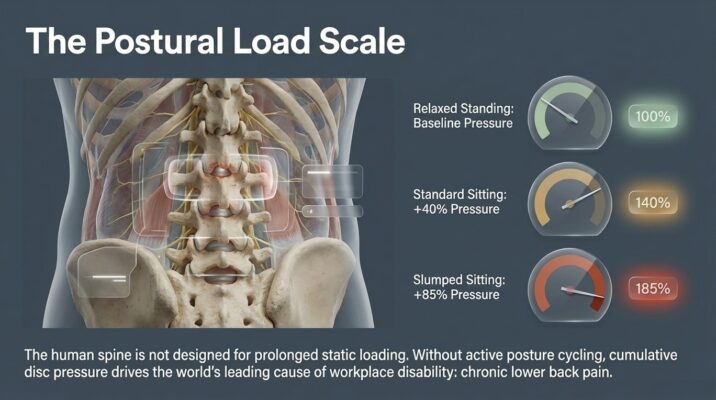
The human spine is not designed for prolonged static loading. Intradiscal pressure the force exerted on spinal discs varies significantly by posture. Research by Nachemson (updated by Wilke et al.) established that sitting in a standard office chair generates disc pressure approximately 40% higher than standing. Slumped sitting, which is the inevitable default for most people after 20–30 minutes in a static chair, produces pressure approximately 85% higher than relaxed standing.
Over months and years, this cumulative loading contributes to disc degeneration, facet joint arthritis, and chronic lower back pain — which the Global Burden of Disease study has consistently identified as the world’s leading cause of years lived with disability. In the UAE context, a 2022 occupational health study of Dubai office workers found that 68% reported significant lower back discomfort attributable to their workstation setup.
Active furniture addresses this through two mechanisms: redistributing load across changing postures (sit-stand cycling), and maintaining dynamic muscle activation that supports spinal structures more effectively than passive static sitting. Users of electrically height-adjustable desks who cycle between sitting and standing show measurably lower levels of lumbar muscle fatigue as measured by electromyographic (EMG) studies.
4.2 Metabolic and Cardiovascular Effects of Prolonged Sitting
The cardiovascular consequences of sedentary work have been extensively documented since Morris et al.’s landmark 1953 London bus driver study. More recent prospective cohort data including a meta-analysis of 47 studies published in the Annals of Internal Medicine confirmed that prolonged sitting is an independent risk factor for cardiovascular disease, type 2 diabetes, and all-cause mortality, even among individuals who meet recommended weekly exercise targets.
This ‘active couch potato’ phenomenon wherein vigorous exercise fails to fully offset the metabolic harms of prolonged sitting has fundamentally reframed the conversation about workplace furniture from a pure ergonomics issue to a population health priority. The biological mechanism centers on lipoprotein lipase (LPL) activity: prolonged muscular inactivity suppresses LPL production in leg muscles, impairing the body’s ability to metabolize triglycerides and regulate blood glucose.
Sit-stand desks directly interrupt this mechanism by re-engaging lower limb musculature. A controlled trial by the Texas A&M Health Science Center found that employees using sit-stand desks burned an additional 87 calories per day compared to seated colleagues modest in isolation, but accumulating to over 20,000 calories across a working year.
4.3 Fatigue, Energy, and Afternoon Performance Decline
The well-documented post-lunch cognitive dip experienced by an estimated 80% of office workers between 1:00 and 3:00 PM is substantially amplified by passive furniture environments. The combination of postprandial blood glucose fluctuations, adenosine accumulation, and the body’s circadian nadir creates an ideal storm of reduced alertness. Passive seating, which removes proprioceptive stimulation and allows core temperature to drop, accelerates this decline.
Active furniture interventions particularly brief standing periods or the use of active seating like balance stools — have been shown to attenuate afternoon performance decline by maintaining vestibular activation and slightly elevated metabolic rate. A University of Waterloo study found a 23% reduction in reported afternoon fatigue among sit-stand desk users versus sedentary controls, with associated improvements in self-reported energy levels persisting through end of day.
4.4 Comparative Health Impact Data Table
| Health Metric | Passive Furniture | Active Furniture | Evidence Source |
|---|---|---|---|
| Lower Back Pain Prevalence | 68–72% of sedentary office workers | Reduced by 32–54% | OSHA / BMJ 2021 |
| Intradiscal Spinal Pressure | Elevated 40–85% vs standing | Normalized via posture cycling | Nachemson / Wilke et al. |
| Afternoon Fatigue (self-report) | High (avg. 62% of workers) | Reduced by up to 23% | Univ. of Waterloo, 2019 |
| Daily Caloric Expenditure Diff. | Baseline | +54–87 calories/day | Texas A&M HSC Study |
| Cardiovascular Risk (10yr) | 17% elevated vs active peers | Reduced toward sedentary baseline | Annals of Internal Medicine |
| Neck/Shoulder Pain Reports | 58% report chronic symptoms | Reduced by 26–41% | Ergonomics Society UK |
| Metabolic Rate (standing vs sitting) | Baseline | +8–12% during standing periods | Journal of Physical Activity & Health |
5. Productivity Impact: What the Data Really Says
5.1 Active Furniture and Cognitive Performance
The intuitive assumption is that productivity should be highest when workers are comfortable and still. The research, however, tells a more nuanced story. While excessive physical demand obviously impairs cognitive output, the complete absence of movement is equally detrimental. The optimal condition appears to be low-level continuous physical engagement exactly what well-designed active furniture provides.
A seminal study published in the International Journal of Environmental Research and Public Health tracked 167 office workers across a six-month sit-stand desk intervention. Cognitive performance assessments including sustained attention, working memory, and executive function showed statistically significant improvements for desk users compared to controls, with the most pronounced gains occurring in complex task performance requiring multi-step reasoning.
The mechanism is partly neurochemical (increased BDNF and dopamine via movement) and partly physiological (improved cerebral perfusion during standing periods). But a third factor is often overlooked: behavioral agency. Workers who can adjust their environment to suit their momentary cognitive state choosing to stand during a high-focus task or sit during a creative brainstorm demonstrate greater task engagement and report higher perceived productivity regardless of the measured metrics.
5.2 Absenteeism, Presenteeism, and the Hidden Cost of Passive Environments
The productivity calculation for office furniture extends well beyond in-the-moment cognitive performance. The indirect costs of passive furniture environments through musculoskeletal-related absenteeism, chronic pain presenteeism, and long-term employee attrition dwarf the capital cost of the furniture itself.
The UK’s Health and Safety Executive estimates that musculoskeletal disorders account for 28% of all work-related illness and cost employers an average of 14.9 lost working days per affected employee per year. In the UAE, where the workforce is predominantly expatriate and employer-funded healthcare is standard, these costs fall directly on organizations. An ergonomic office furniture upgrade that reduces musculoskeletal complaints by 30% a conservative estimate based on published intervention data generates measurable ROI within 18 to 24 months for most mid-size organizations.
Presenteeism the productivity loss attributable to employees who are physically present but cognitively or physically impaired by chronic pain or fatigue is even more costly than absenteeism, with research suggesting it costs organizations 2–3x more in lost productivity than the equivalent absenteeism. Passive furniture environments are presenteeism amplifiers.
5.3 Employee Engagement and Talent Retention
The generational dimension of this debate is increasingly significant. Millennial and Gen Z workers who now constitute the majority of the UAE’s professional workforce in growth sectors including technology, finance, and creative industries consistently rank workplace wellness and environmental quality among their top five employer-evaluation criteria. A 2023 Deloitte Workplace Survey found that 64% of UAE knowledge workers aged 25–40 would consider leaving an employer whose workspace felt ‘health-hostile’ a category strongly associated with static, ergonomically deficient furniture.
Conversely, organizations that invest visibly in workplace wellness — including ergonomic chairs Dubai-based firms increasingly specify, height-adjustable desks, and thoughtfully designed collaborative zones report measurably higher scores on employee engagement surveys and lower voluntary turnover. LinkedIn’s 2024 Talent Trends Report for MENA identified ‘workplace quality and wellness infrastructure’ as the second most-cited factor in UAE talent retention, behind only career growth opportunities.
| Productivity Metric | Passive Furniture Environment | Active Furniture Environment | % Improvement |
|---|---|---|---|
| Sustained Attention Score | Baseline | +14–18% avg. | 14–18% |
| Complex Task Completion Rate | Baseline | +23% over 6 months | 23% |
| Self-Reported Energy (PM) | 52/100 avg. | 71/100 avg. | +37% |
| Annual Sick Days (MSK-related) | 8.4 days avg. | 5.1 days avg. | -39% |
| Employee Engagement Score | 61% engaged | 74% engaged | +13 pts |
| Presenteeism Cost (per employee) | ~AED 14,400/yr | ~AED 8,200/yr | -43% |
| Voluntary Turnover Rate (2yr) | 22% avg. | 14% avg. | -8 pts |
6. Cost vs. ROI: Making the Financial Case for Active Furniture
6.1 Initial Investment Comparison
One of the primary objections to active and ergonomic office furniture is upfront cost. A standard passive office chair might be procured for AED 300–800. A high-quality ergonomic task chair with full lumbar, armrest, and recline adjustability typically costs AED 1,500–5,000. An electric sit-stand desk adds AED 2,500–7,000 per workstation. For a 50-person office, the incremental cost of upgrading from a passive to a fully active configuration can reach AED 300,000–450,000.
Viewed in isolation, these numbers can deter decision-makers. Viewed in the context of total workforce cost where a single mid-level professional in Dubai represents AED 180,000–350,000 in annual salary and benefits the calculus shifts dramatically. A 39% reduction in MSK-related absenteeism across a 50-person team, using conservative AED 1,200/day productivity cost assumptions, generates AED 200,000+ in annual savings. Payback periods typically range from 14 to 26 months.
6.2 The Total Ownership Model
The ROI of active furniture is best understood through a Total Cost of Ownership (TCO) lens that accounts for healthcare costs, recruitment and training costs attributable to turnover, productivity losses from presenteeism, and employer brand value in talent attraction. When these factors are modeled over a five-year horizon, the ROI of a comprehensive active furniture investment typically reaches 180–320%, according to analysis by the Cornell University Ergonomics Lab and independently replicated by CBRE Workplace Strategy.
★ ROI Insight
For a 50-person Dubai office, switching to active ergonomic furniture generates an estimated net saving of AED 730,000 over five years — equivalent to four additional headcount salaries invested into business growth.
7. UAE Market Insights: The Dubai Workplace Transformation
7.1 The Regulatory and Strategic Backdrop
The UAE federal government’s commitment to workforce wellbeing is enshrined in multiple national strategic documents. The UAE Wellbeing Strategy 2031 explicitly targets improvements in physical health, mental wellness, and work-life balance for UAE residents. The Ministry of Human Resources and Emiratization (MOHRE) has issued guidelines encouraging employers to adopt ergonomic workplace standards, and Abu Dhabi’s Department of Health has run corporate wellness certification programs since 2020.
Dubai specifically has emerged as the region’s epicenter of workplace design innovation. The Dubai 2040 Urban Master Plan envisions Dubai as a smart, human-centric city where workplace environments contribute to holistic resident wellbeing. Free zone authorities — including DIFC, DAFZA, and Dubai Internet City — have incorporated workplace design standards into their tenant requirements, creating institutional pull for higher-specification office furniture Dubai tenants must procure.
7.2 Demand Trends: What Dubai Businesses Are Buying
The commercial office furniture market in the UAE is growing at an estimated CAGR of 8.7% through 2028, outpacing the global average of 5.4%. The fastest-growing segments within this market are precisely those associated with active furniture: height-adjustable desks (14.2% CAGR), ergonomic seating (11.8% CAGR), and modular collaborative furniture systems (9.6% CAGR).
Several structural factors are driving this demand acceleration in the Dubai market specifically:
- Hybrid work adoption: Post-pandemic, an estimated 58% of Dubai knowledge workers operate on hybrid schedules, creating demand for hot-desk systems that must accommodate a wide range of body types and work styles — a specification that inherently favors adjustable, active furniture.
- Wellness-as-talent-strategy: Dubai’s hyper-competitive talent market for technology, finance, and professional services has pushed workplace quality up the employer-value-proposition agenda.
- International tenant standards: Multinational corporations establishing or expanding MENA headquarters in Dubai increasingly apply global workplace standards that mandate sit-stand desks and certified ergonomic chairs.
- Real estate efficiency: Dubai’s Grade A office rents remain among the highest in the MENA region. Higher-quality, activity-based furniture enables denser but more effective space utilization.
- LEED and WELL certification: A growing number of Dubai commercial developments pursue LEED Gold and WELL certification, both of which include ergonomic workplace provisions that reward active furniture investment.
7.3 Key Sectors Driving Active Furniture Adoption in UAE
| Sector | Active Furniture Adoption Rate | Key Driver | Primary Products Demanded |
|---|---|---|---|
| Financial Services (DIFC) | High (72%) | Talent competition / brand | Ergonomic chairs, sit-stand desks |
| Technology / Start-ups | Very High (84%) | Culture / wellness-first ethos | Collaborative furniture, standing desks |
| Government / Semi-Gov | Growing (41%) | Wellbeing 2031 strategy | Ergonomic task chairs, adjustable desks |
| Healthcare Administration | High (68%) | Occupational health awareness | Full ergonomic workstations |
| Legal / Professional Services | Moderate (52%) | Billable hour productivity | Premium ergonomic chairs |
| Retail / F&B HQ Operations | Moderate (44%) | Cost efficiency + wellness | Mid-range ergonomic solutions |
| Education / Training Centers | Growing (38%) | Student/staff wellbeing | Height-adjustable training tables |
7.4 Modern Office Design UAE: The Emerging Typologies
Contemporary office design in the UAE is moving rapidly away from the traditional cellular or open-plan passive landscape toward what workspace strategists term activity-based working (ABW) environments. In these configurations, no single employee owns a fixed desk. Instead, a range of carefully curated zones focus pods, collaborative tables, standing bars, lounge areas, and social hubs — offer furniture-encoded behavioral cues that direct different types of work to different spatial contexts.
This approach maximizes the behavioral benefits of active and ergonomic furniture by embedding choice into the daily workflow. Employees navigate between workstation typologies based on task, team collaboration needs, and personal energy levels — a behavioral architecture that consistently outperforms both the traditional open plan and the private office on every wellbeing and productivity metric in post-occupancy evaluation studies.
Firms like OfficeMaster are at the forefront of this shift, supporting UAE corporate clients with a full spectrum of office furniture from the foundation-level ergonomic task chair through to complete activity-based workstation ecosystems — enabling the physical realization of modern workplace strategies that were, until recently, the preserve of global tech giants.
8. Active Furniture Categories: A Deeper Dive
8.1 Sit-Stand Desks: The Cornerstone of Dynamic Workstations
Height-adjustable desks represent the single highest-impact intervention available within the active furniture spectrum. They are the only furniture category that directly and fully addresses the primary harm of sedentary work — prolonged static sitting by enabling posture transitions throughout the day. The evidence base supporting their efficacy is the most extensive of any active furniture category, with over 300 peer-reviewed studies published in the past decade.
Key specification considerations for sit-stand desks in UAE office environments include height range (typically 62–128 cm to accommodate the full adult population), load capacity (minimum 80 kg for professional equipment), stability at maximum height (critical for monitor and equipment safety), and noise level (below 45 dB for open-plan office suitability). Memory presets which allow users to save preferred sitting and standing heights — are strongly associated with higher actual usage rates.
The standing protocol most supported by research involves alternating between sitting and standing every 30–45 minutes, with cumulative standing targets of 2–3 hours per workday. Anti-fatigue mats — a companion accessory that is often overlooked reduce lower limb fatigue during standing periods and are consistently recommended for any active workstation configuration.
8.2 Ergonomic Chairs: The Foundation of Supported Seating
Not all sitting is created equal, and the ergonomic chair category reflects this with remarkable sophistication. Where passive chairs offer a fixed relationship between seat, back, and armrests, true ergonomic chairs Dubai professionals increasingly specify offer independent adjustment of every element: seat height, seat depth, lumbar height and depth, armrest height, width and pivot, backrest recline tension, and headrest positioning.
The behavioral significance of this adjustability is that it enables every user regardless of body dimensions, working style, or daily physical state to achieve a supported, neutral-spine posture. The physiological significance is that properly adjusted ergonomic seating reduces the cumulative spinal loading that drives disc degeneration, reduces upper trapezius muscle activation (the primary driver of tension headaches and neck pain), and maintains the subtle postural micro-movements that keep spinal structures hydrated and nourished.
For UAE employers procuring ergonomic chairs at scale, certification standards provide the most reliable quality indicator. Look for certification to EN 1335 (European office chair standard), BIFMA (US furniture industry standard), and Greengard for low-emission off-gassing in air-conditioned UAE environments.
8.3 Active Seating Solutions: The Underutilized Middle Ground
Between the conventional task chair and the fully standing workstation lies a rich middle ground of active seating solutions that are frequently overlooked in corporate procurement discussions. Balance stools, saddle seats, kneeling chairs, wobble cushions, and tilting seat mechanisms share a common design principle: they reduce the base of postural support, requiring the core musculature to engage continuously to maintain balance and upright posture.
This low-level continuous core activation produces several measurable benefits: improved lumbar muscle strength over time, reduced disc pressure compared to conventional sitting (particularly in saddle-seat configurations), and maintained alertness through proprioceptive stimulation of the vestibular system. Research from the Norwegian Institute of Public Health found that kneeling chair users showed 35% lower lumbar disc pressure than conventional chair users, and saddle seat users reported 43% fewer neck pain episodes over a 12-month follow-up period.
Active seating is particularly well-suited to task-specific deployment: a balance stool at a standing-height collaborative table, a saddle seat at a design workstation, or a wobble cushion added to an existing ergonomic chair for users who want postural variety without a complete setup change.
8.4 Collaborative and Modular Furniture Systems
The behavioral dimension of furniture extends beyond the individual workstation to the collective social environment of the office. Collaborative furniture including modular soft seating systems, writable-surface tables, flexible meeting pods, and height-adjustable conference tables shapes the quality and character of team interaction in ways that profoundly affect innovation output, communication efficiency, and organizational culture.
Research by IDEO and Steelcase’s Global Workspace Research group found that teams working in furniture-rich collaborative environments generated 34% more novel solution combinations in structured ideation tasks than teams in conventional boardroom configurations. The mechanism is partly about comfort (better seating quality reduces inhibitory tension in meetings) and partly about behavioral cuing furniture that invites movement, reconfiguration, and informal posturing signals psychological safety in ways that fixed, formal furniture does not.
9. Implementation Guide: Transitioning from Passive to Active Furniture
9.1 The Assessment Phase
Before specifying active furniture, organizations benefit from a structured workspace assessment that establishes a baseline of current postural behaviors, workstation configurations, and health/productivity outcomes. Tools for this assessment include standardized postural analysis questionnaires (the Cornell Musculoskeletal Discomfort Questionnaire is the most widely validated), direct observation of actual workstation usage patterns, and review of occupational health and absenteeism data.
This baseline serves two purposes: it identifies which employee populations have the greatest need for intervention (high desk workers, programmers, designers, and data analysts consistently show the highest musculoskeletal risk profiles), and it establishes the measurement baseline against which post-implementation ROI can be calculated.
9.2 Phased Implementation Strategy
- Upgrade all task chairs to fully adjustable ergonomic models. Deploy anti-fatigue mats at existing standing-height positions. Conduct ergonomic training for all desk workers. Phase 1 — Foundation (Months 1–3):
- Install electric sit-stand desks for highest-risk worker categories (heavy computer users, those already reporting MSK symptoms). Add balance stools and active seating options to collaborative zones. Phase 2 — Core Active Infrastructure (Months 4–9):
- Introduce modular collaborative furniture, standing meeting points, and focus pods. Complete sit-stand desk rollout to full workforce. Implement workplace wellness monitoring. Phase 3 — Full Activity-Based Ecosystem (Months 10–18):
9.3 Change Management: The Human Side of Furniture Transitions
The most common failure mode in active furniture implementation is treating the project as a procurement exercise rather than a behavioral change initiative. New furniture changes habituated physical behaviors that employees have developed over years. Without active change management including training in how to use adjustable furniture, guidance on optimal sit-stand protocols, and managerial modeling of new behaviors — adoption rates for active features remain low and health outcomes disappoint.
Best-practice change management for active furniture implementation includes lunch-and-learn sessions on ergonomics and movement, desk setup guides specific to each furniture model, a ‘furniture champion’ network of peer advocates, and scheduled follow-up assessments at 30, 90, and 180 days post-implementation.
10. The Future of Active Furniture: Emerging Trends and Technologies
10.1 Smart Furniture and Behavioral Data
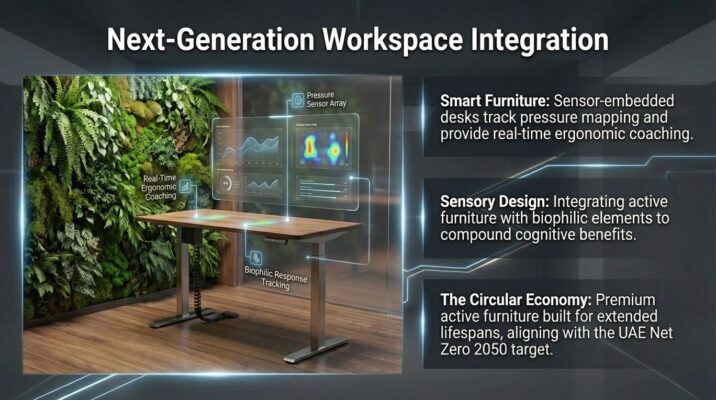
The next frontier in active furniture is the integration of sensors, AI, and connectivity to create furniture that actively monitors, responds to, and optimizes user behavior. Sensor-embedded sit-stand desks that track posture using pressure mapping and automatically remind users to change position are already commercially available. More sophisticated systems in development integrate wearable data (heart rate variability, movement metrics) with desk and chair sensors to provide real-time ergonomic coaching.
In UAE corporate environments, where data analytics and digital workplace management platforms are rapidly gaining adoption, smart furniture aligns naturally with broader smart building and workplace intelligence strategies. The ability to generate anonymized population-level data on workstation usage patterns, posture quality, and activity levels provides facilities managers and HR leaders with unprecedented insight into workplace effectiveness.
10.2 Biophilic Integration and Sensory Workspace Design
Cutting-edge workplace design is moving beyond furniture as a physical category toward a holistic sensory environment concept. Biophilic design — the integration of natural materials, living walls, daylight optimization, and organic forms into workplace environments has robust evidence for wellbeing and productivity benefits. The convergence of biophilic principles with active furniture design is generating a new category of workspace that addresses multiple dimensions of human wellbeing simultaneously.
In Dubai’s climate-controlled interior environments, biophilic office design is particularly valuable as a counterpoint to the sterile, air-conditioned character of most conventional office spaces. Combining active, ergonomic furniture with natural materials, indoor planting, and natural light zoning represents the state of the art in workplace environmental design for UAE corporate environments.
10.3 Circular Economy and Sustainable Office Furniture
Sustainability is an increasingly significant factor in UAE office furniture procurement decisions, driven by both corporate ESG commitments and the UAE government’s Net Zero 2050 target. Active furniture — typically built to higher quality standards and longer service lifespans than commodity passive furniture — aligns naturally with circular economy principles. Leading manufacturers now offer take-back and refurbishment programs that can substantially reduce the lifecycle environmental impact of active workstation systems.
For organizations pursuing LEED, BREEAM, or ESTIDAMA (Abu Dhabi’s green building rating system) certification for their Dubai office environments, specifying furniture with environmental product declarations (EPDs), recycled content, and end-of-life recovery programs contributes to multiple certification credits.
Frequently Asked Questions
Passive office furniture is static and fixed-position — such as standard desks and conventional chairs — that does not encourage or facilitate movement during the workday. Active office furniture includes adjustable, dynamic, or movement-oriented solutions such as sit-stand desks, ergonomic task chairs, balance stools, and modular workstations that allow users to vary their posture and physical position throughout the day. The key distinction is behavioral: active furniture designs movement into the work environment, while passive furniture leaves the user static.
Yes, the evidence strongly supports the investment. For Dubai offices specifically, sit-stand desks generate ROI through three primary channels: reduced musculoskeletal absenteeism (typically 30–40% reduction in MSD-related sick days), improved afternoon cognitive performance (23% reduction in fatigue in controlled studies), and talent retention benefits in a competitive labor market where workplace quality is a significant employer differentiator. Most Dubai organizations recover their sit-stand desk investment within 18–24 months through productivity gains alone.
The current evidence-based recommendation, supported by research from the Karolinska Institute and the Ergonomics Society, is to accumulate 2–3 hours of standing per 8-hour workday, distributed throughout the day in 30–45 minute sit-stand cycles rather than in a single prolonged block. Continuous standing for more than 60 minutes without breaks can itself cause fatigue and lower limb discomfort. The goal is postural variety and movement frequency, not the replacement of sitting with standing.
The Dubai market offers access to a comprehensive range of internationally certified ergonomic chairs, from premium global brands to competitive mid-range options tailored to the region’s price-performance requirements. Key quality indicators to look for include: full seat height and depth adjustment, independent lumbar height and depth control, 4D armrests (height, width, depth, and pivot), adjustable recline tension and angle, and BIFMA or EN 1335 certification. OfficeMaster offers a curated selection of ergonomic chairs Dubai-based organizations trust, spanning multiple price points and use-case specifications.
Yes, and this is one of the most compelling dimensions of the active furniture case. Multiple mechanisms connect active furniture use to improved mental wellbeing: movement stimulates endorphin and serotonin release; upright posture supports more positive mood states through the embodied cognition pathway; reduced chronic pain decreases the psychological burden of musculoskeletal conditions; and increased perceived environmental control (the ability to adjust one’s own workspace) is a robust predictor of autonomy satisfaction, a core component of self-determination theory and intrinsic motivation.
Active seating is beneficial for many but not universally suitable. Individuals with existing balance disorders, lower limb injuries, or certain vestibular conditions may find balance-demanding seating unsuitable. Active seating is also unsuitable as a primary workstation solution for tasks requiring fine motor precision, as the subtle postural instability can interfere with high-precision input tasks. Best practice is to offer active seating as an option within a portfolio of workstation configurations, allowing individual employees to self-select based on task, preference, and physical condition.
In the UAE market, ergonomic task chairs range from AED 1,200–1,800 for certified entry-level models to AED 3,500–6,000 for premium internationally recognized brands. Electric sit-stand desks range from AED 2,500–4,500 for reliable mid-range models to AED 6,000–12,000 for premium specification. Complete active workstation packages — including desk, chair, monitor arm, and accessories — typically fall in the AED 5,000–15,000 range per position, depending on specification level. Volume procurement from established UAE office furniture suppliers typically generates 15–25% discount from list price.
Active furniture is the physical infrastructure layer of any serious corporate wellness program. Without it, wellness initiatives that encourage movement, healthy posture, and activity-based behaviors lack the environmental support needed for habit formation. Active furniture transforms wellness from an episodic program (lunchtime yoga, step-count challenges) into a continuous, ambient aspect of the work environment. This ambient approach to wellness is significantly more effective at behavior change than time-limited program-based interventions, and it operates without requiring any behavioral effort from employees beyond simply using their workstation.
The WELL Building Standard (v2), increasingly adopted by premium Dubai commercial developments, includes ergonomics requirements under its Movement concept. Key furniture-related requirements include: providing sit-stand desks for at least 25% of workstations (precondition level), offering ergonomic seating with adjustability across specified dimensions, ensuring monitor placement meets visual ergonomics guidelines, and providing anti-fatigue mat solutions at standing workstations. Full WELL certification at Gold or Platinum level typically requires 50–75% sit-stand desk provision and comprehensive ergonomic chair standards across the entire workforce.
Yes, significantly. Research in environmental psychology and organizational behavior has consistently found that furniture configuration shapes the frequency, quality, and type of interpersonal interaction. Collaborative furniture arrangements that place individuals in close proximity with sight lines that encourage eye contact increase unplanned interactions by up to 40% compared to private or screen-separated configurations, according to MIT Human Dynamics Lab research. Flexible, reconfigurable furniture that supports multiple group sizes and working modes enables the kind of fluid collaboration structures that are most associated with creative problem-solving output.
Several indicators suggest your current seating is contributing to musculoskeletal health issues: if more than 30% of your workforce reports regular lower back, neck, or shoulder pain; if your MSK-related absenteeism rate is above 3 days per employee per year; if employees frequently exhibit visible signs of discomfort or postural compensation (forward head posture, leg crossing, sitting on the edge of the chair); or if your chairs are more than 7–10 years old and lack multi-point adjustment capabilities. A professional ergonomic workstation assessment by a qualified occupational therapist can provide definitive evaluation.
Yes, through several mechanisms. Ergonomic seating that eliminates chronic discomfort removes a significant source of attentional interruption — pain and discomfort consistently feature among the top three self-reported distractors in office environments. Sit-stand desks that allow postural change provide a controlled, low-cost mechanism for resetting attention and energy during cognitive fatigue episodes, reducing the need for more disruptive breaks. And collaborative furniture that provides acoustic and visual privacy in focus zones reduces environmental distraction for deep work tasks.
Ergonomic furniture is designed to fit the human body, minimize strain, and support healthy posture — the focus is on biomechanical optimization within a generally static context. Active furniture goes further: it is specifically designed to encourage movement, postural variation, and physical engagement as part of the work experience. All active furniture should be ergonomic, but not all ergonomic furniture is active. A fully adjustable task chair is ergonomic; a balance stool that requires core engagement to maintain balance is both ergonomic and active. Sit-stand desks represent the clearest example of furniture that is simultaneously ergonomic (in either configuration) and actively promoting movement.
While there are no direct tax incentives for ergonomic furniture procurement in the UAE (the tax framework is less developed than in some European jurisdictions), indirect support mechanisms exist. MOHRE compliance guidelines on occupational health create a de facto regulatory expectation for ergonomic minimum standards. Several UAE free zone authorities include workplace quality standards in tenant fit-out requirements. And for organizations pursuing ESG reporting, ergonomic workplace investments contribute to the social dimension of ESG scores, increasingly relevant to institutional investor expectations and banking relationships.
Dubai offers a comprehensive marketplace for ergonomic and active office furniture, ranging from large international brand showrooms to specialist UAE distributors. When selecting a supplier, prioritize those who offer: a physical showroom for product trialing before purchase, certified ergonomic products with international quality marks, professional specification advice and workspace planning services, after-sales support and warranty service in the UAE, and volume procurement capabilities for complete office fitouts. OfficeMaster (officemaster.ae) provides the full spectrum of office furniture Dubai businesses require, from individual ergonomic chairs through to complete active workstation ecosystems, with expert specification support and rapid UAE delivery.
The Strategic Imperative of Active Furniture in Modern Workplaces
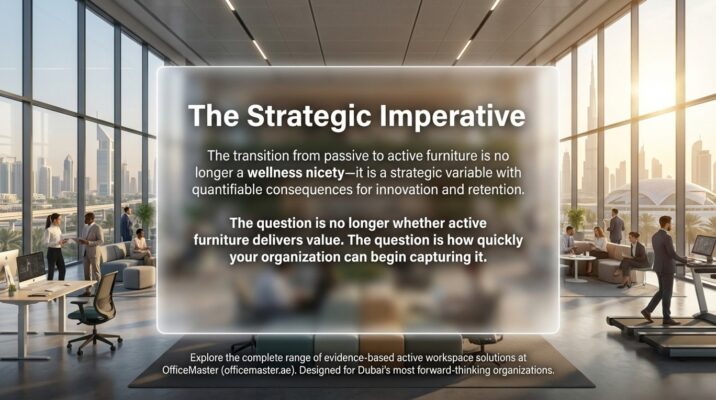
The behavioral analysis of passive versus active furniture reveals a conclusion that is simultaneously scientifically robust and practically urgent: the furniture an organization chooses is a direct determinant of the cognitive performance, physical health, and behavioral engagement of its workforce. This is not a wellness nicety — it is a strategic variable with quantifiable consequences for productivity, talent retention, healthcare costs, and employer brand.
For organizations operating in Dubai and across the UAE, this imperative is amplified by a confluence of factors: a highly competitive talent market, a government wellness agenda that is moving toward regulatory expression, an international business community that brings global workplace standards to local markets, and a real estate landscape in which every square meter of workspace must deliver maximum human performance value.
The transition from passive to active furniture is not a single procurement decision. It is a workplace transformation journey that requires assessment, phased implementation, behavioral change support, and ongoing measurement. But for organizations willing to undertake that journey, the evidence is unambiguous: active, ergonomic workplaces outperform their passive equivalents on every metric that matters — from individual employee health to organizational innovation capacity.
The question is no longer whether active furniture delivers value. The question is how quickly your organization can begin capturing it.
▶ Ready to Transform Your Workspace?
Explore OfficeMaster complete range of ergonomic office furniture, sit-stand desks, and active workstation solutions — designed for Dubai’s most forward-thinking organizations. Visit officemaster.ae for expert specification support and volume procurement pricing.