


Blog
How Workspace Accessibility Shapes Office Furniture Designs
Jan
The relationship between workspace accessibility and customized office furniture designs impact inclusion, ergonomic and empowering modern workspaces. As the boundaries between work and life blur, the need for thoughtful and accessible design becomes more critical than ever. Office furniture shapes have revolutionized the physical environments and the experiences of those who inhabit them. How workspace Accessibility Shapes Office Furniture Designs is embarked by the profound interconnection between foundational principles of accessibility and the evolution of office furniture. Let’s break down this narrative of how thoughtful design choices are not merely about aesthetics but serve as catalysts for a more accessible, comfortable, and inspiring work culture.
What is Workspace Accessibility?
Workspace accessibility refers to the design and implementation of features and practices which ensure that an individual’s immediate work environment is inclusive and accommodating to diverse needs and abilities. It specifically addresses the physical aspects of the workspace, including furniture designs for desks, chairs, tools, and the overall layout. The goal is to create a working environment where every employee, regardless of physical or cognitive abilities, can perform their tasks comfortably and efficiently.
Key aspects of Workspace Accessibility
- Ergonomic Furniture: Providing adjustable and supportive furniture, such as chairs with mobility and swivel functionality features like and desks capable of accommodating handedness dynamics and various workstyles.
- Accessible Tools and Equipment: Ensuring that tools and equipment used in the workspace are designed to be easily usable by individuals with different abilities, considering factors like size, weight, and ease of operation.
- Assistive Technologies: Integrating technologies that assist individuals with specific needs, such as screen readers, voice-activated controls, or specialized keyboards.
- Flexible Workstations: Allowing for flexibility in the arrangement of workstations to accommodate different work preferences and mobility requirements. As the right-handed office furniture is standardized, thus left handed furniture customization settles the demand
- Clear Pathways and Spaces: Ensuring that the layout of the workspace allows for easy navigation, especially for individuals with mobility aids or those who may require additional space to achieve work accessibility.
Office Furniture Design Evolution
Office furniture designs evolution clearly reveals all the dynamic transformations office furniture designs have undergone throughout history. Relating to how the varying design concepts have been adapting to changing work dynamics, technological advancements, and evolving design philosophies. In earlier periods, office furniture was primarily functional, providing essential pieces for clerical tasks. However, as work roles shifted and technology became integral to the workplace, furniture design adapted to accommodate these changes. The traditional closed office concepts gave way to open and collaborative workspaces, with furniture evolving to modular designs. Aesthetic considerations gained prominence, with modern designs reflecting brand identity and creating visually appealing workspaces. Technology integration became a fundamental aspect to address connectivity needs and support modern work tools. Sustainability emerged to influence material choices and production processes while aligning with eco-friendly practices.
Currently, contemporary office furniture design places a strong emphasis on employee well-being. It incorporates ergonomic features and comfort-oriented elements to enhance overall work experiences.
Intersecting Paths: Accessibility and Modern Office Furniture Designs
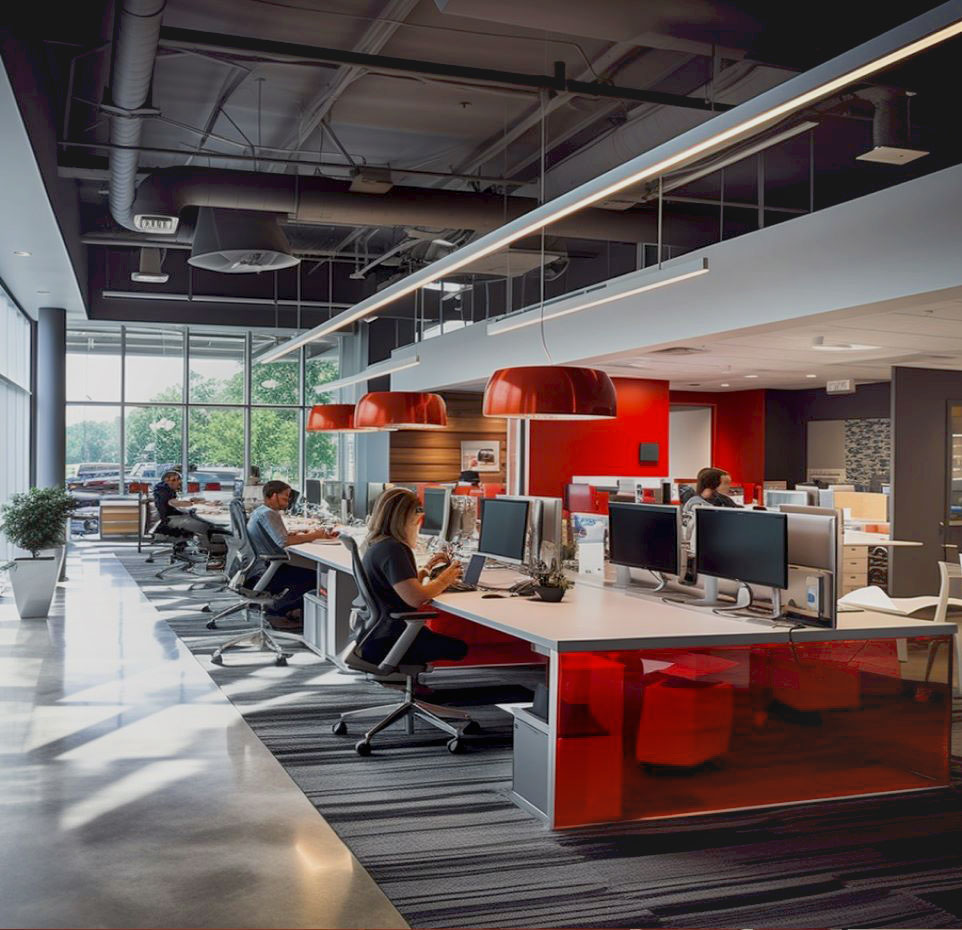
These are the deliberate efforts in office furniture designs towards work accessibility. These design approaches have transformed office spaces to become aesthetically pleasing and functional while inherently inclusive and accommodating to individuals with diverse abilities.
-
Modular Office Furniture Design
Modular Office Furniture Design represents a transformative approach to workspace accessibility by prioritizing adaptability and personalization. This innovative design philosophy revolves around the use of interchangeable and customizable components, easily configured to suit diverse needs. Today modern offices utilize modular workstations featuring adjustable desks, flexible seating arrangements, and easily reconfigurable layouts. In this setting, an employee with specific accessibility requirements, such as a wheelchair user, can effortlessly customize their workspace by adjusting the height of the desk and rearranging modular components to create a barrier-free path. The modular design allows for the seamless integration of assistive technologies, such as adjustable monitor arms or accessible keyboard trays
For flexibility of modular office furniture with modular sofas, office booth and pods ensure that the workspace can be easily modified to accommodate collaborative tasks or individual focus which promoting inclusivity for employees with varied work preferences.
-
Handedness Dynamics Integration
Handedness Dynamics Integration targets thoughtful accommodation of right and left-handed preferences to enhance overall work accessibility. This approach acknowledges the diverse needs of individuals based on their dominant hand and integrates ergonomic solutions within office furniture designs. A combination of modular designs, mobility with swivel functionality, reversible configurations and adaptable storage solutions enable handedness dynamics integration. It contributes to a workspace where individuals can seamlessly navigate their tasks, regardless of handedness.
-
Custom-Made Office Furniture
Custom-Made Office Furniture is a powerful tool for enhancing both workspace accessibility and brand identity especially within commercial spaces. Clients opt for it to tailor their specific needs and preferences on a specific furniture type. The aesthetic elements of custom-made furniture align with the brand identity to reflect the company’s values and culture. This allows to strategically incorporate brand colors, logos, and unique design elements into furniture. Customized furniture designs becoming an extension of the brand identity fosters a cohesive and professional atmosphere.
-
Ergonomic Furniture Design
Ergonomically designed furniture focuses on crafting office furniture primarily enhancing the well-being and comfort of individuals within the workspace. Ergonomic principles shape the layout and features of furniture to support the natural movements and postures of the human body. Furniture inherently designed by these principles minimizing the risk of discomfort or injury and promoting overall efficiency. Ergonomically integrated furniture designs provide adjustability options, ensure supportive seating with mobility and swivel functionality features
Look at the implementation of height-adjustable desks tailoring workstations to a preferred seated or standing position. The ergonomic chairs with customizable features to ensure optimal lumbar support and comfort for extended periods of work. As the workspace demands for inclusivity and accommodative of the various physical requirements, ergonomics gets incorporated into advanced office furniture designs.
-
Maximizing Minimalism : Space-saving Office Furniture Designs
Office furniture for Maximizing minimalism creates compact and multifunctional furniture solutions that optimize available space without compromising usability. Integrating space-saving designs into office furniture, the workplace becomes more accessible as it accommodates a variety of spatial constraints. For example, modular desks with built-in storage, collapsible workstations, and wall-mounted organizational units maximize floor space, providing flexibility for diverse layouts and addressing the needs of compact office settings. The emphasis on minimalism enhances physical accessibility while contributing to a clutter-free environment. It promotes a more inclusive atmosphere where occupants navigate their workspaces comfortably.
Take the first step toward creating an accessible workplace by gaining valuable insights into design innovations redefining office furniture. Elevate your office space, enhance employee well-being, and embrace a future where work accessibility is at the forefront of design. Resolve the limitations hindering workspace accessibility with the future office furniture designs for an inclusive and accommodating environment.
